
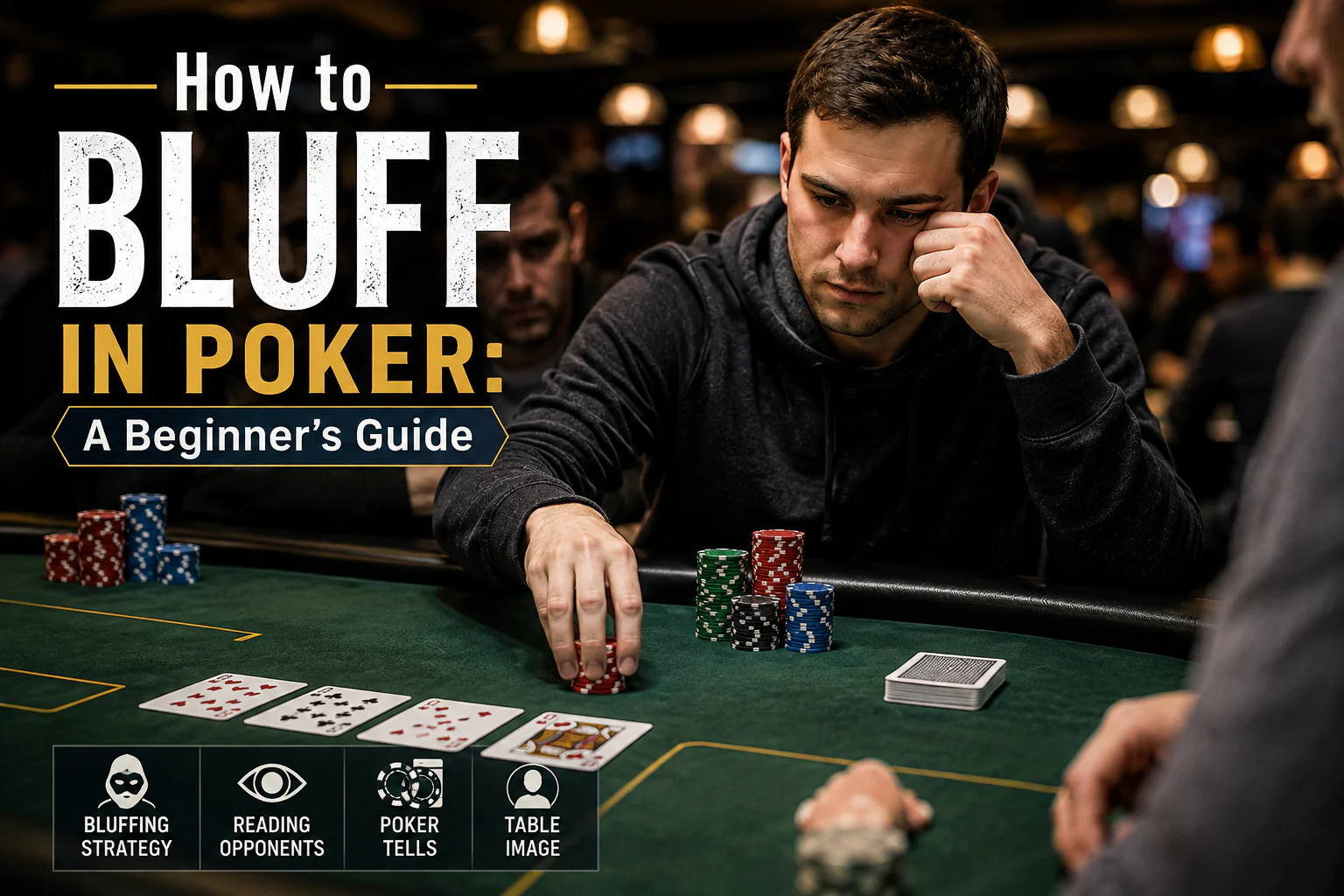
You’re staring at a pair of sevens. The board shows three cards that don’t help you at all. Your opponent checks. This is the moment where how to bluff in poker actually matters, because a good bet here can win you a pot your cards never earned.
Bluffing scares new players. This is similar to cheating with money, where being caught is even more embarrassing than losing a hand on honest terms. Bluffing is not cheating people just for fun; bluffing is making a play that fits into the context of all the information your opponent has seen on the table so far.
What a Bluff Really Is
Bluffing is betting or raising with a poor hand. The purpose of bluffing is not winning the showdown but forcing your opponent to fold before it comes to that. If they fold, your actual cards stop mattering.
There are two main types worth knowing as a beginner, and they behave pretty differently.
A pure bluff happens when your hand has almost no chance of improving. You’re betting entirely on the story your bet tells, not on your cards getting better later. There’s no backup plan here, which is precisely why it’s the riskier of the two.
The semi-bluff is more flexible because you can make a bet with a hand that may become a good hand with the next cards, such as a flush draw or an open-ended straight draw. Should you call, you will have the possibility of winning the whole hand with the next cards. This is the safer bluff for beginners, mostly because you’re not relying on a single outcome to save you.
Continuation Bets: The Bluff You’ll Use Most
If you’ve played more than a handful of hands of Texas Hold’em, you’ve probably already made a continuation bet bluff without realizing what it was called. You raise before the flop. The flop comes out and misses your hand entirely. You bet anyway, like nothing happened.
This works more often than you’d think, mainly because most hands miss the flop completely. The player who called your raise probably didn’t connect with the board either. A confident bet after the flop tends to get a fold, especially from players who only continue with hands that actually landed something.
The catch is that continuation bets stop working against players who call no matter what shows up. If someone keeps sticking around regardless of the board, that’s your cue to slow down and stop bluffing that opponent.
Reading the Table Before You Bluff
Bluffing isn’t a decision you make at random. It leans heavily on poker table image, which is really just how your opponents see you based on how you’ve played so far.
Fold a lot early on and play tight, and your bets start carrying more weight. People assume you only bet when you’ve got something real, which makes your bluffs land more often than they should.
Bet into every pot instead, and your bluffs stop working almost immediately. Players start calling you down once they’ve caught you pushing chips with nothing more than a couple of times.
Position matters here too, maybe more than people expect. Acting last gives you information the other players simply don’t have. You get to watch how everyone reacts to the board before deciding whether a bluff even makes sense, which is exactly why late position bluffs tend to outperform early ones. You’re guessing less and reading more.
For a deeper look at how betting patterns shift throughout a hand, BlackjackCasinoPoker’s guide to reading opponents breaks down the small signals that separate a good bluff from a costly one.
Poker Tells Worth Watching For
“Poker tells” refers to the minor actions that players perform, indicating the strength of their hand. In live poker, this may include a quick glance at their chips prior to making a betting decision, an unexpected quick call, or a sudden change in the position. Online, it’s mostly bet timing. A snap bet often means the decision was already made before it was their turn, while a long pause can mean real thinking is happening on the other end.
No tell is guaranteed, and that’s worth remembering before you start reading too much into one hand. People are inconsistent. A nervous habit that meant something last hand might mean nothing the next.
When to Bluff in Poker (And When Not To)
It is much more important to know when to bluff in poker than how to bluff. A few situations tend to make bluffing more likely to work in your favor. Your opponent checking on a scary board is one. So is a board that favors your preflop story, like high cards falling after you raised before the flop.
The opponent matters just as much as the situation, though. Bluff against players capable of folding. Skip the ones who call with almost anything, because no bet size or story is going to change their mind once they’ve decided to see a hand through.
Calling stations fall into that second group. These are players who call bets regardless of what they’re holding, usually because they haven’t learned to let go of weaker hands yet. No amount of clever betting moves them off a hand they’ve already committed to. Save your bluffs for opponents who are actually thinking about their decisions instead.
There is one final truth about bluffing that must be stated: do not bluff simply because you are bored or still bitter about having lost the previous round. A bluff motivated by frustration is likely to be ill-timed and will be readily apparent to any halfway decent opponent.
Making It Work Over Time
A bluff should be used only sparingly within the framework of your game. Try a semi-bluff when you’re holding a real draw. Fire a continuation bet when the board supports your preflop story. Keep an eye on your table image and adjust once you notice people are onto you.
If you’re new to this, start small. Practice a semi-bluff on a hand with real backup equity before you try a pure bluff with nothing behind it at all. Get a vague idea of how successful your bluffs are on various players and base your use of bluffs on that information moving forward. Eventually, you will know when certain situations are a good time to bluff without even thinking about it.
FAQ Section
Is bluffing important in winning poker?
It is not essential for poker victory, but it can definitely be useful. When you play it right, you might win even without the need to bluff. Still, the majority of winning players resort to bluffing here and there since they create uncertainty for their opponents and obtain pots that cannot be won with cards only.
How often should a player bluff in poker?
There should be no fixed number for bluffing, as too much bluffing would make the player predictable and easy to read. Good advice for novices is to bluff only in situations that warrant such a strategy and not according to some schedule.
What will be the safest way to bluff for a beginner?
A semi-bluff poker hand with a draw is usually safest. If your opponent calls, you still have outs to improve to a real hand on a later street.
Is it possible for players of poker on the internet to be able to catch bluffing?
Indeed! Although players online do not use physical tells, they instead rely on bet size, the timing of bets, and bet history from past hands to infer if someone is bluffing or not.