
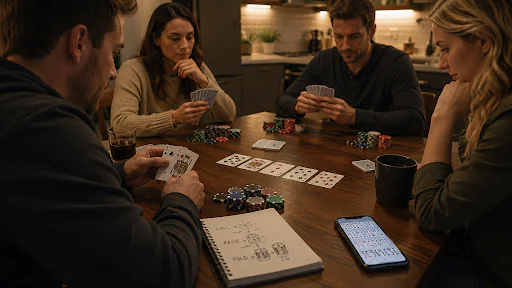
Dave was having his first poker night with a box of $40 chips purchased at a garage sale. No idea about the term “blind.” I mean none of us knew about it. There were four of us playing at Dave’s kitchen table with someone looking up poker rules on their phone and, by 11 p.m., we lost all track of whose chips were whose. Total chaos. That’s basically how most people learn how to play poker for beginners, if we’re being real. Badly. With friends. Arguing the whole time about whether a flush beats a straight.
You don’t have to learn it the hard way though. Here’s what actually matters before your first game.
What You Need Before You Sit Down
A normal 52-card deck, that’s step one. You’ll need something for money too, chips work best, coins are fine in a pinch. At least two players start, but four to eight is where it gets fun. Most beginners land on Texas Hold’em first since everyone shares some cards, making it way easier to follow along.
One thing people always forget: sort out the money before anyone sits. Not after someone’s already $30 down and annoyed about it. A typical beginner game runs $10 or $20 buy-ins, small bets like a quarter and fifty cents. Keep the stakes low and nobody stresses.
Poker Hand Rankings
Memorize this list. Memorize it. Not the rough idea – the actual order – because this is what decides who walks away with the pot. Top of the list: royal flush. A, K, Q, J, 10, all the same suit. One step down, straight flush – five in a row, same suit, say 6 through 10 of clubs. Then four of a kind. Full house next, three of a kind plus a pair. After that a flush, any five cards of one suit. Then a straight, five in a row, mixed suit. Three of a kind, two pairs, one pair, and last is a high card, basically nothing going on.
Worth knowing too, suits don’t outrank each other. A flush in spades isn’t stronger than one in hearts. So if two players both land a flush, it’s the higher top card that wins.
Texas Hold’em Step by Step
Sounds like a lot at first, but it’s really only four parts. Play a hand or two and it just clicks.
Preflop
Two cards each, face down, yours only. Keep them hidden, always. Right off the bat, two players near the dealer have to throw in money first, that’s the small blind and big blind. Then everybody else decides, calls, raises, or folds.
The Flop, Turn, and River
Three cards flip up in the middle, that’s the flop. A betting round happens. One more card lands after the turn, another round follows. Then the river, last card, final round of betting. This whole stretch you’re piecing together the best five cards you can, some yours, some shared.
Showdown
Whoever’s still around after that last bet flips their cards. The best hand wins the pot.
Betting Basics: Call, Raise, Fold
Three moves total. Call, match the bet, stay in. Raise, put in more, everyone else has to match or get out. Fold, drop your cards, walk away, usually smart if you’re not feeling good about your hand.
Where you’re sitting matters a lot more than people think starting out. Act later and you’ve already seen everyone else’s move, that’s real info. Act early and you’re basically guessing. New players tend to overrate their hand acting early, mostly because they haven’t figured out how much they’re missing.
Plenty of games let you bet your whole pile whenever, that’s no-limit. Feels like a lot when you’re new, so try asking for a limit instead. Bets get capped there. Costs less when you mess up.
Common Mistakes Beginners Make
Money doesn’t usually vanish from bad luck. It’s a habit, mostly.
Playing too many hands, that’s the big one. Folding feels like quitting, so beginners hang on with junk like Jack-4 just to stay in, and it eats away at their stack slowly. Chasing draws too, betting big hoping the river bails you out, without ever really running the numbers on whether it’s worth the risk.
Then there’s what I’d call the give-it-away thing. Sighing at a rough card. Sitting up straighter when the hand’s good. Double checking cards while bluffing, like you forgot what you’re holding. None of that’s subtle, people pick up on it fast. Manners count too, no showing cards early, no acting out of turn, and skip the slow-roll, dragging out a win just to enjoy it a bit longer. Just comes off rude, wherever you’re playing.
Home Game, Online, or Casino: Pick Your Start
Starting with friends is the easiest way in, no rush, ask whatever you need to. Once that starts feeling normal, online rooms let you rack up way more hands, plus a lot of them have free tables to mess around on first. Ready for something more real? Sites like blackjackcasinopoker.com break down how to play poker for beginners moving into actual real-money tables, and what to expect once you’re there.
Live casinos are the bigger leap. Quicker pace, sharper players usually, dealer handles the mechanics so it’s all decisions on your end. Worth a shot once you’ve got a home game or two behind you. Skipping straight there isn’t the move though.
Getting Comfortable With the Basics
None of this takes forever to pick up. Hand rankings, four rounds, call versus raise, most folks have it down in half an hour. What actually takes time is reading people and handling your money right. That part only comes from playing badly, same as everyone starts out.
Once it feels natural, blackjackcasinopoker.com has beginner tables and guides that build right off what’s covered here, making the jump to a real game a lot less intimidating.
Want the version most casinos still go by? Bicycle Cards’ basics of poker guide is worth bookmarking.
FAQ
What’s the easiest poker game for a beginner to learn?
Texas Hold’em, easily. Two cards each, shared community cards, and it’s what every casino and home game defaults to, so tutorials are everywhere.
How much money should a beginner bring to their first poker game?
Only what you’re fine losing, period. Home games usually land around $20 to $40. At a casino, check the minimum posted and don’t blow past whatever limit you set for yourself.
Do you need to memorize poker hand rankings?
Basically, yeah. At least royal flush down to high cards. Odds can wait a while. But not knowing if a flush beats a straight costs you real hands fast.
What’s the difference between no-limit and limit poker?
No-limit, you can shove your whole stack in anytime. Limit poker caps bets and raises at a fixed size, easier on beginners since one hand can’t wipe you out.